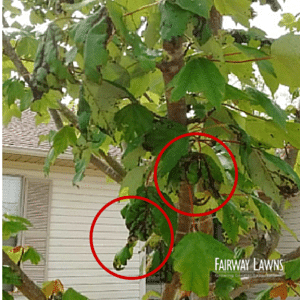
Anthracnose on maple

anthracnose on maple

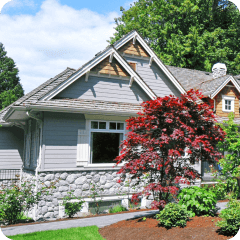
Anthracnose on dogwood

Anthracnose on dogwood

Anthracnose Diseases of Trees

Anthracnose is basically a harmful type of leaf spot, caused by different fungal diseases that affect different trees.  Some types affect just leaves, others affect new shoots, twigs, and bracts.  Since it is a disease that can spread easily, one should always rake up and dispose of affected leaves or twigs that fall off the tree.  Leaves or twigs on the tree that are affected should be pruned out and destroyed.  Watering an affected tree or shrub at the base, rather than sprinkling from the top down, will further prevent spread of the disease.  Anthracnose shows up in April and May, during cool, rainy periods, and affects trees in the shade more than those in the sun.

The best prevention is to keep trees healthy, fertilize them every year, and make sure they get plenty of water, especially during drought.  Trees should be planted and spaced properly to allow air flow, and pruned and trimmed appropriately.

Following are some of the different types of Anthracnose:

Anthracnose of Maples – symptoms are dark leaf spots that may progress until the entire leaf is black and drops off.  This disease rarely causes real harm to a healthy tree, but it is very unsightly.  A healthy tree will more than likely replace the leaves.  Here’s a short audio article on Maple Anthracnose from the University of Arkansas.

Anthracnose diseases of Dogwoods – there are 2 specifically different anthracnose diseases that affect dogwood trees.

Spot anthracnose (Elsinoe corni) on dogwoods is another disease that is unsightly but rarely harms the tree.  Spots first appear on the dogwood flowers (which are actually bracts, specialized leaves that look different from the regular tree leaves.)  The spots grow larger and the middle of the spot falls out, making it look tattered.  Affected leaves on the tree have small brown spots and can be stunted, curled or deformed.

Dogwood anthracnose, caused by the fungus Discula destructiva, was introduced in the U.S. in the 70’s.  It occurs in shady, wet conditions and can kill a tree.  As the name implies, it usually affects dogwood trees. Brown and yellow blotches appear on leaves and can spread to twigs, branches and the trunk.  This fungus is very contagious and can be spread by insects or water droplets.

Simple leaf scorch caused by drought, or Septoria leaf spot – an unsightly but relatively harmless fungus --  can look like dogwood anthracnose, so be sure to get a proper diagnosis. 

Dogwoods need good drainage and suffer in hot, dry weather.  They don’t have a very deep root system, so they need irrigation during drought.  Drought stress will make them more susceptible to disease.  Actually, drought stress will make any tree more vulnerable to disease or insect infestation.

The University of Arkansas has an excellent PDF file on anthracnose that affects dogwoods, and it includes some great pictures of the different symptoms.

Nandina anthracnose (colletotrichum sp.)  Identifying symptoms are a dark brown leaf spot with a yellow halo around it and sometimes holes in the leaf where the diseased tissue falls out.  Twigs and shoots may also be invaded, and a nandina shrub may lose all its leaves.  Several seasons of defoliation may results in the shrub’s death.  This fungal disease strikes in April and May, usually during wet weather.  Shrubs in shady locations are more susceptible.  Diseased leaves fallen to the ground can infect new growth in the spring so it’s best to pick up the leaves and dispose of them.

Steve Vann with the University of Arkansas has written a great article about anthracnose on nandinas, and also one titled Anthracnose Diseases of Common Landscape Trees which is well worth reading.

Anthracnose and Other Common Leaf Diseases of Deciduous Shade Trees by Sharon von Broembsen with Oklahoma State University is very informative, especially if you’re not sure what’s wrong with a tree showing symptoms.  It covers not only anthracnose, but also leaf spot, leaf blotch, shot-hole and other diseases on a myriad of trees from maples, to birch, oak, sycamores, etc.

Last word - keeping your trees healthy is your best defense!

Get a free Tree and Shrub care estimate.